Natural Spring Allergy Relief: The Gut-Nose Axis
Ah, Spring. The most audacious season, when flowers burst open like they have been waiting all winter to party, trees litter the earth with dusty bits, birds start their morning concerts, and your immune system uses your face to yeet out every speck of pollen in the air via sneezing. If you’re already stocking up on tissues and wondering why your eyes feel like they joined a pepper-spraying contest, you are not alone. Allergy season is upon us!
Before you accept another season of foggy-headed misery, here are simple, evidence-based natural strategies that can make a real difference: traditional remedies, gut-supportive habits, and a targeted allergy relief supplement from Mountain Peak Nutritionals to consider if you want extra help.
Quick Start: 7 Easy Ways to Start Today
If you only try a few things this allergy season, start here:
- Drink 1 cup of nettle, ginger, or peppermint tea daily
- Eat one fermented food each day (yogurt, kefir, sauerkraut)
- Add fiber-rich foods like beans, oats, or berries
- Have protein with every meal
- Eat apples, citrus with pith, onions, or berries for natural antihistamine flavonoids
- Support your gut with good sleep and daily movement
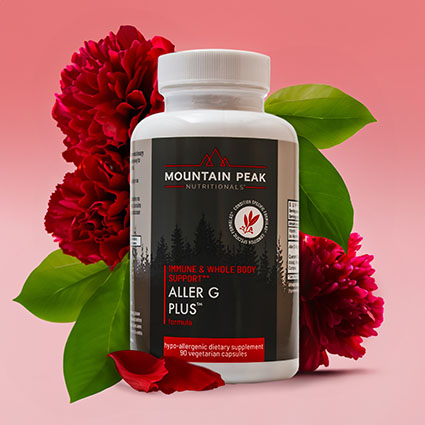
- Consider Mountain Peak Nutritionals Aller G Plus for added support
- Vitamin C (450 mg): May help lower histamine levels and support respiratory and immune health.
- Quercetin Dihydrate: Helps stabilize mast cells and reduce IgE-driven allergic inflammation.
- Stinging Nettle Leaf: May help modulate histamine activity and reduce nasal swelling.
- Bromelain: Supports sinus drainage and helps calm inflammatory responses.
- Citrus Bioflavonoids: Enhance vitamin C activity and support respiratory tissues.
Traditional Remedies to Calm Allergies and Boost the Immune System:
These everyday options are gentle, tasty, and backed by research:
Nettle leaf tea:
Steep fresh or dried leaves daily. Nettle has long been used for its nutritional and immune-supportive properties and may help reduce histamine activity and soothe nasal passages. Just be careful if you harvest it yourself. They are called stinging nettles for a reason.
Local raw honey (1–2 teaspoons daily):
Some studies suggest local honey may help reduce allergic rhinitis symptoms, possibly by exposing the immune system to tiny amounts of environmental pollen. Plus, you get all the other goodies bees provide. Thanks, bees!
Turmeric golden milk or tea:
Curcumin, the active compound in turmeric, has anti-inflammatory effects and may improve nasal airflow in people with allergies. Golden milk is made from turmeric and warming spices mixed into hot milk or a non-dairy beverage. If cooking with turmeric, add black pepper to improve absorption.
Fresh pineapple:
Pineapple naturally contains bromelain, an enzyme that may support sinus drainage and reduce inflammation. Bromelain supplements are sometimes used when mucus is thick and difficult to clear.
Ginger or peppermint tea:
Both are soothing to the throat. Ginger may also help relax airway passages and support respiratory comfort. These herbs are also known as carminatives, meaning they can soothe the digestive tract and help reduce gas and bloating.
Bioflavonoid-rich foods:
Apples (with the skin), citrus pith (the white part), berries, onions, capers, and green tea contain bioflavonoids such as quercetin, rutin, and luteolin. These compounds help stabilize mast cells (the immune cells responsible for releasing histamine during allergic reactions).
Eat high protein:
Protein provides essential amino acids used to repair and maintain tissues, including the intestinal lining. Amino acids such as glutamine, glycine, and proline help support gut barrier integrity and immune balance. Include a protein source at each meal. Whole animal proteins such as eggs, poultry, beef, fish, and dairy provide complete amino acid profiles needed for tissue repair and immune support.
This nutritional strategy works best together with a gut health approach because allergies are not just a nasal problem. They involve the immune system, the gut microbiome, and the body’s overall inflammatory balance.
Gut-Health Strategies for Environmental Allergies
The gut-immune axis, sometimes called the gut-nose axis for environmental allergies, refers to the two-way communication between your intestinal microbiome and the immune system in your respiratory tract.
Beneficial gut bacteria break down dietary fiber and proteins to produce metabolites such as short-chain fatty acids (like butyrate) and tryptophan-derived indoles (beneficial compounds gut bacteria make from protein). These compounds circulate through the body and help regulate immune responses by promoting regulatory T cells and calming excessive inflammation (the main driver of seasonal allergy symptoms).
When gut microbial diversity is low, these protective metabolites decline, which may increase sensitivity to environmental allergens.
So what can we do to support gut health and potentially improve our allergic response during springtime?
Eat more fiber-rich foods.
Fiber feeds beneficial gut bacteria, which produce short-chain fatty acids that support the gut lining and reduce inflammation. Add beans, lentils, oats, vegetables, berries, and whole grains. Aim for about 25–38 grams per day and increase gradually.
Include fermented foods regularly.
Fermented foods provide beneficial microbes that support microbiome diversity and immune balance. Eat foods like yogurt, kefir, sauerkraut, kimchi, or miso. Aim for about one serving daily.
Eat a wider variety of plant foods.
Different plant fibers and polyphenols feed different gut microbes. Try to eat 20–30 different plant foods per week, including vegetables, fruits, legumes, nuts, seeds, and whole grains.
Include resistant starch foods.
Resistant starch reaches the colon intact, where microbes ferment it into beneficial short-chain fatty acids. Good sources include beans, lentils, oats, green bananas, and cooked-then-cooled potatoes or rice. Do I hear potato salad?!
Limit highly processed foods and refined sugars.
These foods are typically low in fiber and can negatively affect gut bacteria and increase inflammation. Replace packaged snacks and sugary drinks with whole foods.
Stay hydrated.
Adequate water intake supports digestion and helps fiber move through the digestive tract.
Eat slowly and chew well.
Proper chewing improves digestion and reduces poorly digested food reaching the colon.
Exercise regularly.
Physical activity is associated with greater microbial diversity and improved gut health. Aim for about 150 minutes of moderate activity weekly.
Prioritize sleep.
Poor sleep disrupts circadian rhythms that influence both metabolism and the gut microbiome. Aim for 7–9 hours nightly.
Manage stress.
Chronic stress can disrupt the gut-brain axis and alter microbiota balance. Simple practices like walking, breathing exercises, meditation, or time outdoors can help regulate the stress response.
Complementary Supplement Support: Mountain Peak Nutritionals Aller G Plus
When you want an extra layer of defense, consider Mountain Peak Nutritionals Aller G Plus. It combines vitamin C with complementary herbs and enzymes that work well alongside the lifestyle steps above.
Key ingredients:
Suggested use: Take 1–2 capsules 2–4 times daily, away from meals, or increase during peak symptoms as directed by your healthcare provider.
Start the teas, foods, and gut-supportive habits early in the season. Combine them with simple measures like saline sinus rinses, HEPA air filtration, and good hydration, and consider targeted supplements with guidance from your healthcare provider if you need additional support.
Most natural approaches work best when used consistently for several weeks, especially when started before pollen levels peak.
If spring allergies usually knock you off your feet, consider trying a few of these strategies this season. Small daily habits often make the biggest difference when practiced consistently. And if someone in your family suffers every spring, send them this article! They might discover a few simple changes that make the season much easier.
Important: This article is for educational purposes and not to replace a doctor patient relationship. Always consult your healthcare provider before starting any new supplement, dietary change, or natural protocol, especially if you have underlying conditions, are pregnant, nursing, or take medications.
References
- Mlcek, J., Jurikova, T., Skrovankova, S., & Sochor, J. (2016). Quercetin and its anti-allergic immune response. Molecules, 21(5), 623. https://pmc.ncbi.nlm.nih.gov/articles/PMC6273625/
- Bakhshaee, M., et al. (2017). Efficacy of supportive therapy of allergic rhinitis by stinging nettle (Urtica dioica) root extract: A randomized, double-blind, placebo-controlled, clinical trial. Iranian Journal of Pharmaceutical Research, 16(1), 112-118. https://pmc.ncbi.nlm.nih.gov/articles/PMC5963652/
- Secor, E. R., et al. (2013). Bromelain inhibits allergic sensitization and murine asthma via modulation of dendritic cells. Evidence-Based Complementary and Alternative Medicine, 2013, Article 702196. https://pmc.ncbi.nlm.nih.gov/articles/PMC3870104/
- Ghalibaf, M. H. E., et al. (2023). The effects of vitamin C on respiratory, allergic and immunological diseases: An experimental and clinical-based review. Inflammopharmacology. https://pmc.ncbi.nlm.nih.gov/articles/PMC9970132/
- Hu, Y., et al. (2024). Association between gut and nasal microbiota and allergic rhinitis: A systematic review. Allergy, Asthma & Immunology Research. https://pmc.ncbi.nlm.nih.gov/articles/PMC11246088/
- Ried, K., et al. (2022). Effects of a probiotic formulation on seasonal allergic rhinitis in adults: A randomized double-blind placebo-controlled trial. Frontiers in Nutrition, 9, Article 887978. https://www.frontiersin.org/journals/nutrition/articles/10.3389/fnut.2022.887978/full
- Asha’ari, Z. A., et al. (2013). Ingestion of honey improves the symptoms of allergic rhinitis: Evidence from a randomized placebo-controlled trial. Annals of Saudi Medicine, 33(5), 469-475. https://pmc.ncbi.nlm.nih.gov/articles/PMC6074882/
- Wu, S., et al. (2016). Effect of curcumin on nasal symptoms and airflow in patients with perennial allergic rhinitis. Annals of Allergy, Asthma & Immunology. https://pubmed.ncbi.nlm.nih.gov/27789120/
- Zhang, J., et al. (2025). Gut microbiota metabolites and key target molecules in allergic rhinitis: A multi-omics study of gut-nose axis regulation. Frontiers in Microbiology. https://www.frontiersin.org/journals/microbiology/articles/10.3389/fmicb.2025.1702518/full
- Kallio, S., et al. (2024). Early-life gut microbiota associates with allergic rhinitis during 13-year follow-up in a Finnish probiotic intervention cohort. Microbiology Spectrum. https://journals.asm.org/doi/10.1128/spectrum.04135-23
-1.png)